
Overview:
Beneath the Abyss is a Snap Spectacles AR experience that lets users explore geologic time through a deep-sea sediment core. Each layer toggles the surrounding environment to the era it preserves, from the Jurassic to the Anthropocene. Built in 36 hours for an OceanX-sponsored hackathon at the University of Oregon Reality Lab, targeted at general audiences 8 and up.
Collaborators:
Helal Sujon, Marcus Chaknova.
Role:
I was the primary specs developer on Team Core Diggers. My focus was the interaction model, focusing on how users move between sediment layers and what information surfaces in each era. The stack: Lens Studio for AR, Blender for custom asset modeling, TypeScript for interaction logic, and original voiceover and sound design.
Challenge:
OceanX's mission is making ocean exploration public. The design challenge was making geologic time feel tangible rather than academic, as sediment cores are one of science's most powerful tools for reading Earth's past, but most people have never seen one. The 36-hour sprint forced one central question: what's the simplest gesture that makes millions of years feel touchable?
Process:
Concept: Sediment Core as Interface
We built the experience around a single interaction: toggling through a sediment core's layers. Each layer corresponds to a geologic era, and selecting it toggles an image displaying microscopic fossils to help users discover the difference between each sediment layer. The toggle mechanic kept the experience spatial without requiring gesture training.
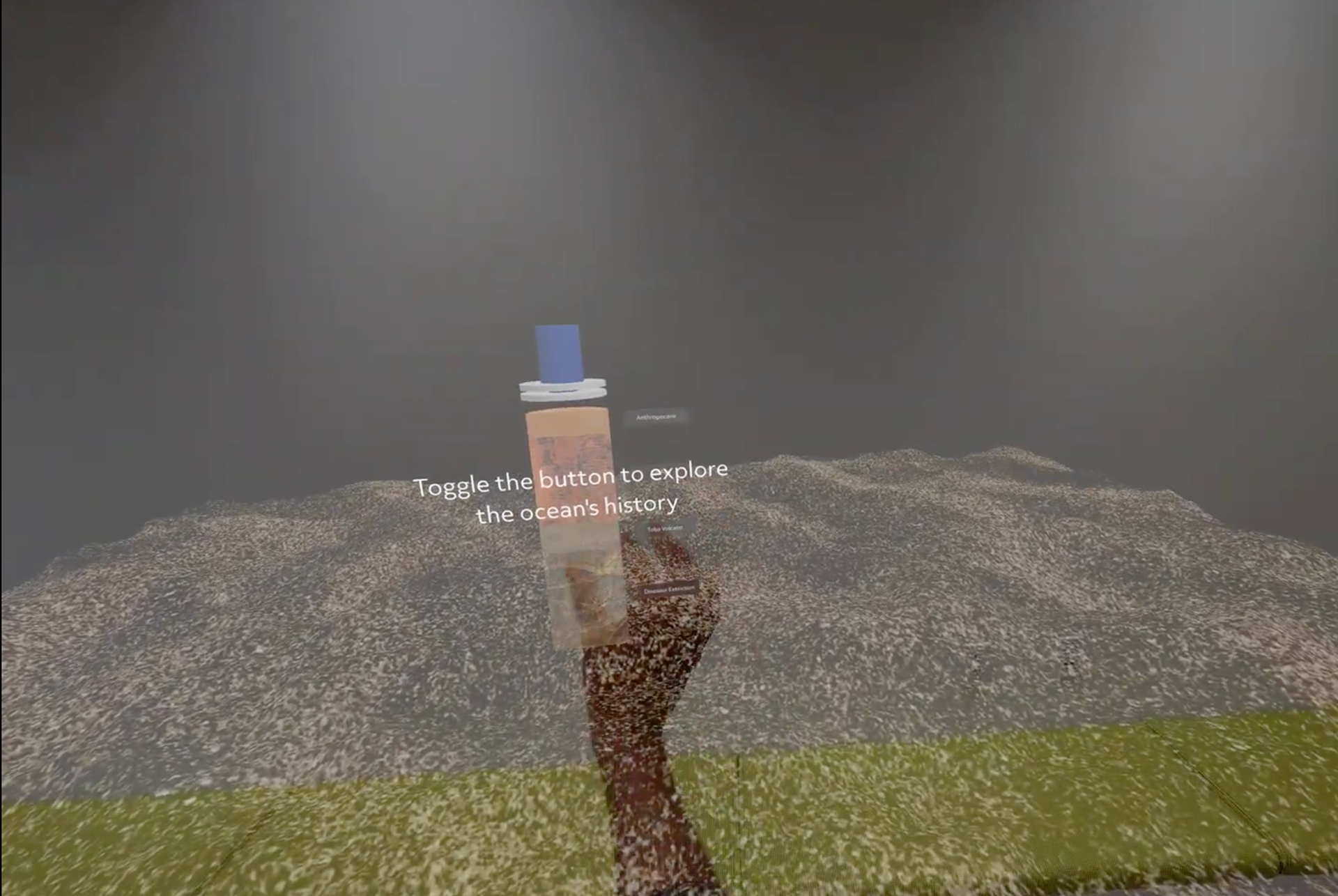
Pinch Interaction of push core.
Asset Build & Technical Build
Four sediment sphere types were modeled and textured in Blender, each surface corresponding to a different geologic period. These fed into Lens Studio alongside custom TypeScript for layer logic, Spectacles UI components, and original voiceover narration to guide users through each era without text overload on the display.
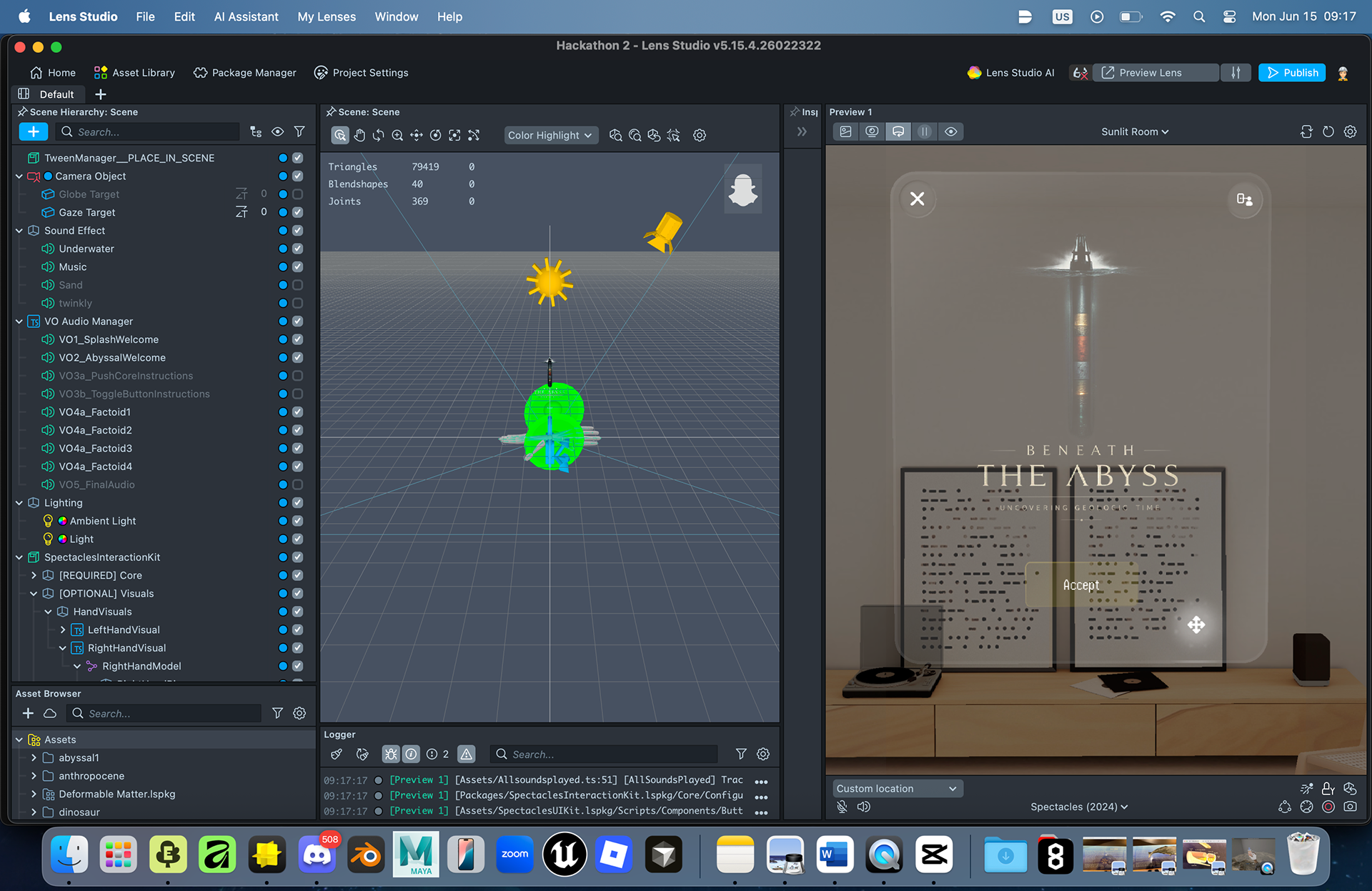
Beneath The Abyss Lens Studio layout.
Experience Flow
Users see a 3D sediment core anchored in their space. Toggling reveals layers one at a time as each transition changes the environment around them. The experience was designed to work as a standalone installation at OceanX events or ship voyages, with the Spectacles form factor keeping hands free for physical core samples on site.
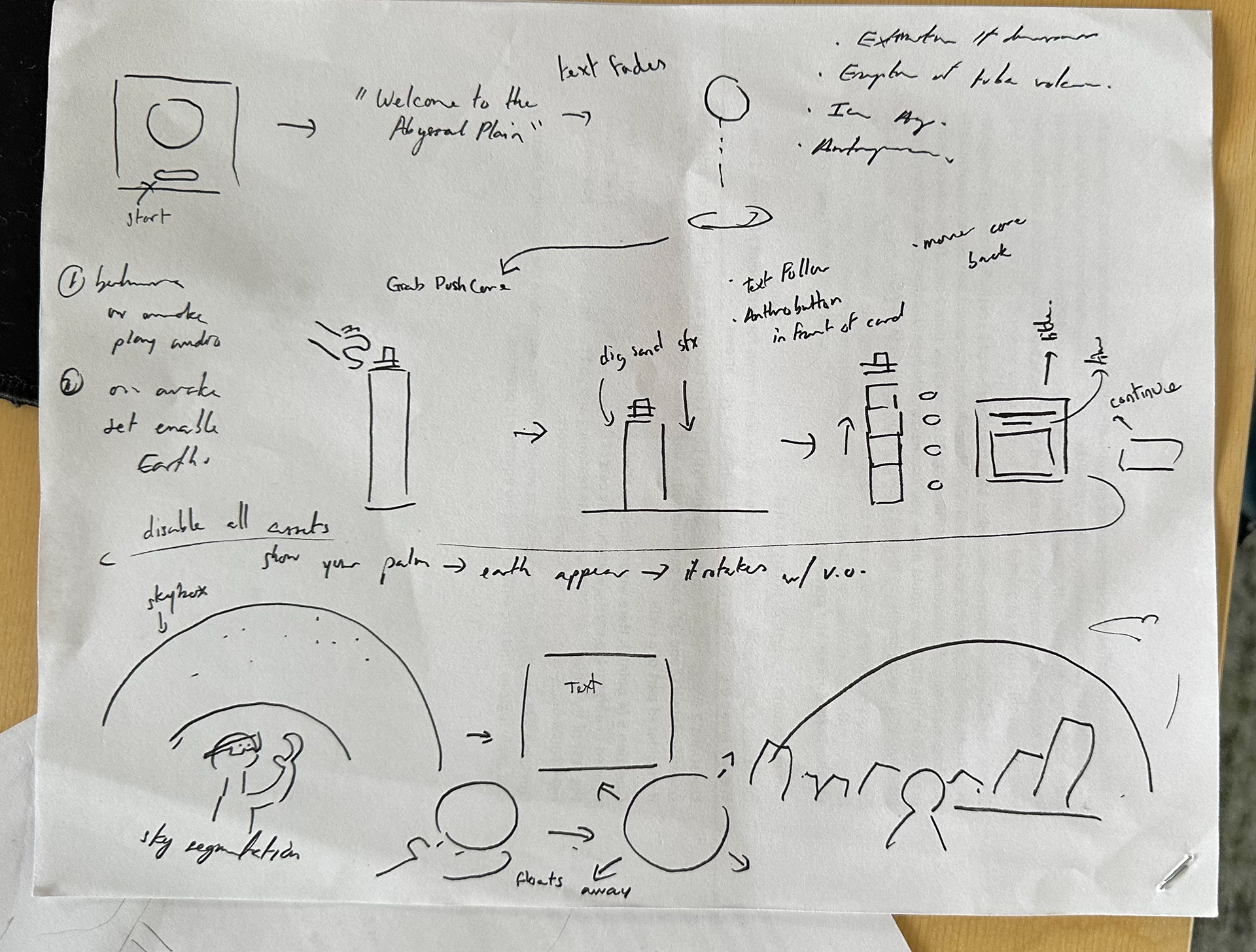
User experience flow.
Results:
The team shipped a functional Spectacles experience in 36 hours: custom-modeled sediment assets, working layer-toggle logic, era-specific AR environments, and original audio. The pitch proposed two future directions, which are a core research simulation and a full-room installation called 'From Shore to Abyss,' combining projection mapping, spatial audio, and physical core samples.
Reflection:
This project changed how I think about AR for education. The toggle mechanic worked because it gave users control over pacing without adding UI complexity. Designing for Spectacles also pushed me to think spatially from the start because you can't adapt a phone UI to a glasses form factor.